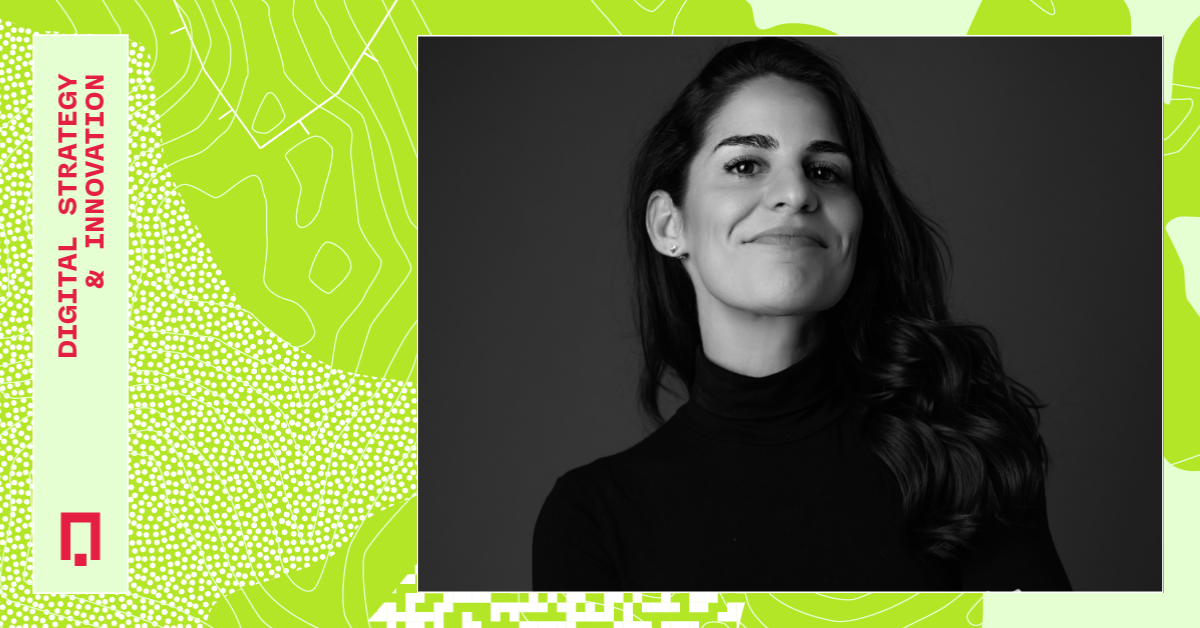
Traveler segments are becoming increasingly fluid, and algorithms are changing the way we identify them. In this interview with Veronica Civiero, CEO and co-founder of Delivera and former manager at Meta, we explore the evolution of Meta Advertising in tourism: from targeting based on predefined segments to the use of behavioral signals, and the increasingly strategic role of creativity. This transformation is redefining the work of advertisers and presenting a new challenge: not only reaching those who already want to travel, but also helping to spark the desire to travel.
1. If traveler “tribes” are becoming increasingly fluid, does it still make sense to build Meta campaigns based on predefined audiences?
Less and less, at least as a primary starting point.
For years, we’ve tried to break down the complexity of people into segments: age, interests, behaviors, lookalikes. But the same person might be looking for a cultural weekend getaway, a vacation with the kids, and—just a few months later—a completely different trip.
Today, Meta is much more effective at processing a volume of signals that we would be unable to organize manually. This doesn’t mean the strategy goes away. It means the focus of our strategy shifts: less “Who do I want to reach?” and more “What signals am I sending to the system?”
Goals, conversion metrics, creative content, and the quality of feedback take center stage.
2. Is Meta now able to recognize a “tribe” even before we are able to define it?
In a way, yes. But he probably would never call it a “tribe.”
We need to name these categories: families, digital nomads, luxury travelers, and wellness enthusiasts. The algorithm doesn’t. It can identify correlations between behaviors, content, and response probabilities before we’re able to turn them into a clear segment.
Here’s the difference: we create categories, while machine learning identifies patterns. And those patterns can change constantly.
3. From Audiences to Signals: What Changes for Advertisers When the Algorithm Identifies Potentially Interested People?
The advertising profession is changing a lot.
Value no longer lies solely in the ability to build highly targeted audiences. It is becoming increasingly important to build a system of quality indicators: accurate objectives, reliable conversion data, diverse creative content, and continuous measurement and feedback.
We used to tell the platform, “I want to reach these people.” Today, more and more often, we tell it, “This is the result I want to achieve; these are the signals that matter to me—help me find the people most likely to respond.”
Control doesn’t disappear. It shifts.
4. Interests, behaviors, creativity: What signals currently allow Meta to identify travel desires that have not yet become explicit intentions?
In my opinion, this is the most interesting part for tourism.
The intention to travel doesn’t arise the moment a person searches for a flight. Before that, there are many subtle cues: content they spend more time viewing, videos they save, topics they engage with, creative content they respond to, and past behavior.
And this is where creativity also becomes a targeting signal.
If I describe the same resort through the lens of wellness, gastronomy, design, or family-friendly experiences, I’m not just changing the message—I’m sending different signals to the system to reach different people.
That’s why, today, creativity doesn’t come after media planning. It’s part of the distribution system.
5. If we no longer decide exactly who to reach, how does that change the work of those who develop Meta Advertising strategies for tourism?
Paradoxically, it becomes more strategic.
As the platform automates an ever-increasing portion of audience targeting, our job becomes figuring out what intent we want to generate, what signals allow the algorithm to recognize it, and what content can turn a passing interest into a desire.
For years, digital marketing has primarily focused on capturing attention. I believe the next battle will increasingly be about intent.
And that’s the point I’ll be making at BTO as well: AI is no longer limited to predicting what we’ll choose. It’s beginning to play a role in shaping our choices themselves.
For the tourism industry, this means stopping to ask only, “How do I reach people who are already ready to travel?” and starting to ask, “How do I become part of the system that helps spark that desire?”
The interview was conducted by Giulia Eremitafor the “Digital Strategy and Innovation” track. Edited by Roberta Milano.
Join us at Stazione Leopolda for the panel“Beyond Targeting: The New Meta Advertising—Signals, Creativity, and Tribes”: November 11, at 12:00 PM in Hall #2.
Choose herethe BTO 2026 ticket that best suits your needs.
We look forward to seeing you in Florence for BTO – Be Travel Onlife.
