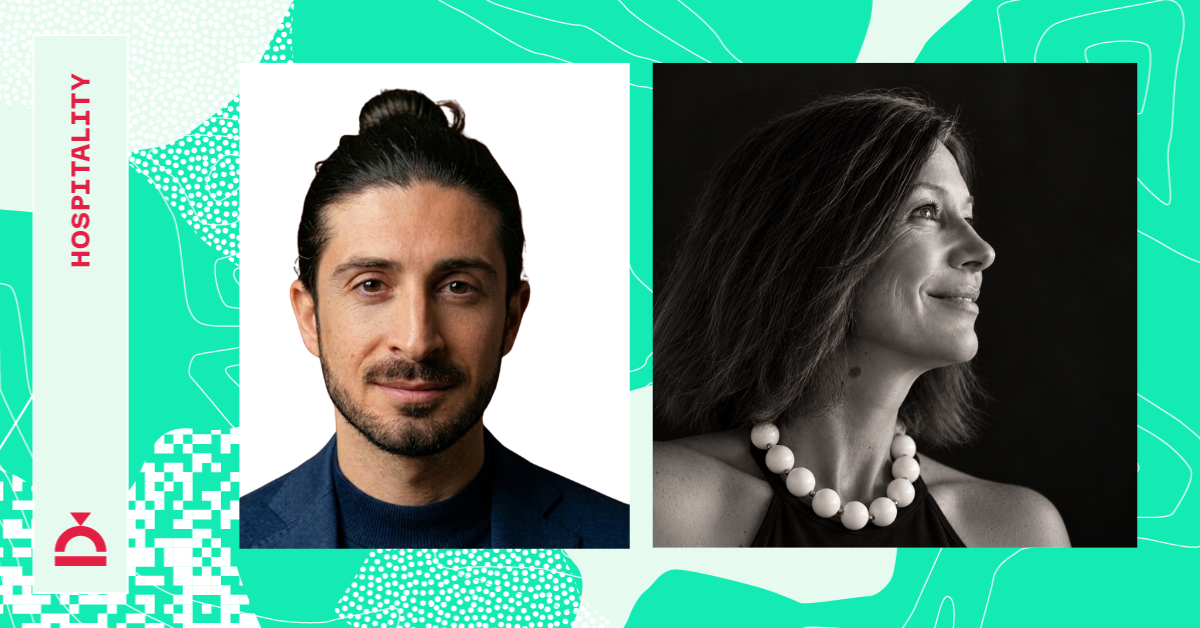
A Conversation with Silvia Moggia ahead of the BTO event in November. The interview was conducted by Stefano Maccioni as part of the new editorial project linked to the BTO 2026 Social Media LAB, a workshop on communication and collective storytelling that brings together creators, communication professionals, and experts in tourism and artificial intelligence.
When addressing the topic of sustainability in the hotel industry, the risk of falling into clichéd rhetoric is extremely high: just think of how many times, in recent years, we’ve been bombarded with a proliferation of slogans and minor “sacrifices” demanded of guests (from the classic “reuse towels” tag to bedside brochures on environmental responsibility), while, in reality, the hotel’s operations continue to run exactly as they did before.
In my work, and even more so as a member of the BTO 2026 Social Media LAB, the primary goal is to provide industry professionals with concrete analytical tools to move beyond certain communication shortcuts and focus on the substance of the data, management decisions, and actual processes.
It is from this idea that our discussion with Silvia Moggia—a consultant and industry expert—emerges; at BTO 2026, she will lead the panel “Offbeat Hotel: From Surface-Level Sustainability to Achievable Net-Zero.” This conversation aims to shed light on what it truly means today to tackle the ecological transition in the hospitality industry without resorting to false promises; at the same time, it is an interview that offers food for thought on the topic and on what the shift from theory to practice entails.
Stefano: In the debate on sustainable tourism, the conversation almost always ends up focusing on CO₂, plastic, and water consumption; however, there is a human and economic dimension that is often overlooked. Where should a hotel that wants to call itself sustainable really start?
Silvia: “There’s a fundamental misunderstanding that needs to be cleared up right away: reducing sustainability to a purely environmental issue is completely insufficient if we isolate the topic from its human and economic context.
A hospitality project must start with what is closest to it, beginning with the people who work there. In an industry that complains daily about staff shortages, true sustainability is measured first and foremost by the dignity of work: fair wages, regular contracts, ongoing training, and real opportunities for growth are not incidental costs, but the foundation of any serious vision. A hotel that underpays its staff or fails to value their skills cannot claim to be “green,” no matter what it says on its website.
This approach extends to inclusivity, creating work and welcoming environments capable of breaking down barriers related to gender, background, sexual orientation, or disability, as well as to the local economy. “Social sustainability means replacing cutthroat bidding with transparent, long-term relationships with local suppliers, giving back value to the community that hosts us by supporting local organizations, events, and culture.”
Stefano: Marketing or process: What indicators reveal whether an organization is truly improving efficiency or just putting on a show?
Silvia: “The first indicator is very simple: ask the hotelier how many kilograms of CO₂ his hotel produces per night. Anyone who’s really working on these processes has a number—perhaps an imperfect one, but they have one—and can tell you how much gas, electricity, and water account for. Marketers, on the other hand, respond with an adjective.”
The second factor is language. The more a website is filled with terms like “eco,” “green,” and “zero impact,” the more suspicious you should be. True sustainability is demonstrated through verifiable facts: where the energy comes from, which suppliers were chosen and why, and what has been eliminated. With the entry into force of European Directive 2024/825 on unfair commercial practices, generic claims and climate neutrality based solely on offsets have become illegal.
The third indicator is measured behind the scenes. If the staff can explain the reasoning behind a procedure, the change has become part of the management process. If sustainability is known only to those who write the website content, it’s just for show.
Finally, there’s one almost foolproof clue: those who are serious also talk about what they haven’t done yet. Transparency about one’s limitations is the most credible thing a hotel can communicate.”
Stefano: It’s a common view among many hoteliers—especially independent ones—that the transition is a cost without a clear return in the short term. Do you really think that’s the case?
Silvia: “It depends on where you start. If you begin with structural investments, such as facilities or renovations, the payback period is long, and it’s only fair to be honest about that. But a significant part of the transition doesn’t require a large budget—it requires good management.”
Reducing breakfast waste by focusing on quality rather than quantity has an immediate impact on food costs. Reviewing housekeeping and laundry procedures saves water, energy, and labor hours. Periodically comparing suppliers and energy rates—based on the same consumption levels—is perhaps the action with the fastest return on investment of all, but very few do so systematically.
The real obstacle isn’t the cost—it’s the lack of tracking. If you don’t know how much you’re spending per night per guest, you can’t even see how much you’re saving, and you end up feeling like you’re wasting money. A model that pays for itself does exist, but it starts with data and processes. Of course, some choices—such as favoring local suppliers—sometimes involve higher direct costs: in those cases, the return is in quality, relationships, and value for the local community, not on the bill, and you need to have the strategic courage to make that choice.”
Stefano: Today’s travelers want to travel ethically, but they’re not willing to sacrifice comfort or pay a “green” surcharge. How do you resolve this conflict?
Silvia: “By stopping asking guests to do the work for us. The towel card is the perfect symbol of the problem: it requires guests to make a sacrifice so the hotel can save money. There’s nothing wrong with that, but it can’t be the cornerstone of our strategy.”
Sustainability that works is the kind that guests perceive as a quality, not as a sacrifice. A breakfast with fewer items—but all organic and locally sourced—is a better option, not a lesser one. A local supplier adds a story that enriches the guest’s stay. Comfort remains unchanged; what changes is the way it’s achieved.
When it comes to pricing, the stance must be clear: sustainability should never be sold as an extra. It must be integrated into the product and the overall rate, just as with any other component of the experience. And when it comes to communication, the usual rule applies: fewer slogans and more facts. “The guest doesn’t need to be told that they’re doing good; they need to realize it for themselves during their stay.”
Stefano: What is the first concrete step that a manager and a communications director can take tomorrow morning?
Silvia: “The person managing the property should gather the utility bills from the past twelve months, calculate the gas, electricity, and water usage, and divide those figures by the number of guest-nights. No need for complex software or consultants: all you need is a spreadsheet and a couple of hours of focused work. It’s a step that almost everyone skips, but once you’ve done it, you’ll have your first reliable measurement and uncover unexpected inefficiencies, starting with gas consumption.”
“For marketing professionals, however, the first step is to review the website and promotional materials with the new European directive in hand, replacing every adjective with a verifiable fact.”
A Guide for Managers and Communicators
The discussion with Silvia offers valuable insights for both those who manage a lodging facility and those responsible for its communications: sustainability is not measured by statements of principle, but by the ability to translate them into concrete decisions that are integrated into day-to-day operations.
This shift in perspective requires a systematic approach, attention to data, and consistency between what a hotel does and what it communicates. After all, credible communication cannot be separated from substance, just as best management practices gain value through the ability to make them understandable and recognizable to guests.
What other tools and practices are useful for those working in tourism? Check out BTO!
My conversation with Silvia highlights—for me as well—the main challenge facing those who manage hospitality facilities or oversee their positioning: translating these principles into daily procedures that are replicable, financially sustainable, and capable of generating value that guests can perceive. It is precisely at this intersection of numbers, management, and strategies that the discussion will unfold during BTO 2026.
The panel led by Silvia will provide an opportunity to analyze case studies, measurement models, and operational tools designed for those who need to balance the books of a hotel business without resorting to narrative shortcuts; a professional event dedicated to those who work in this industry every day and want to acquire the necessary insights to collectively interpret the transformations of the market, society, and the new tribes of travelers.
The event with Silvia Moggiawill take place at Stazione Leopolda onNovember 11 at 10 a.m.as part of the panel “Offbeat Hotel: From Surface-Level Sustainability to Achievable Net-Zero”.
The interview was conducted by Stefano Maccioni, a young professional selected for his marketing and communication skills at the Social Media LAB at BTO 2026.
Edited by Roberta Milano.
Would you like to participate in the panel discussion and other events at BTO 2026? Choose here the ticket that best suits your needs.
