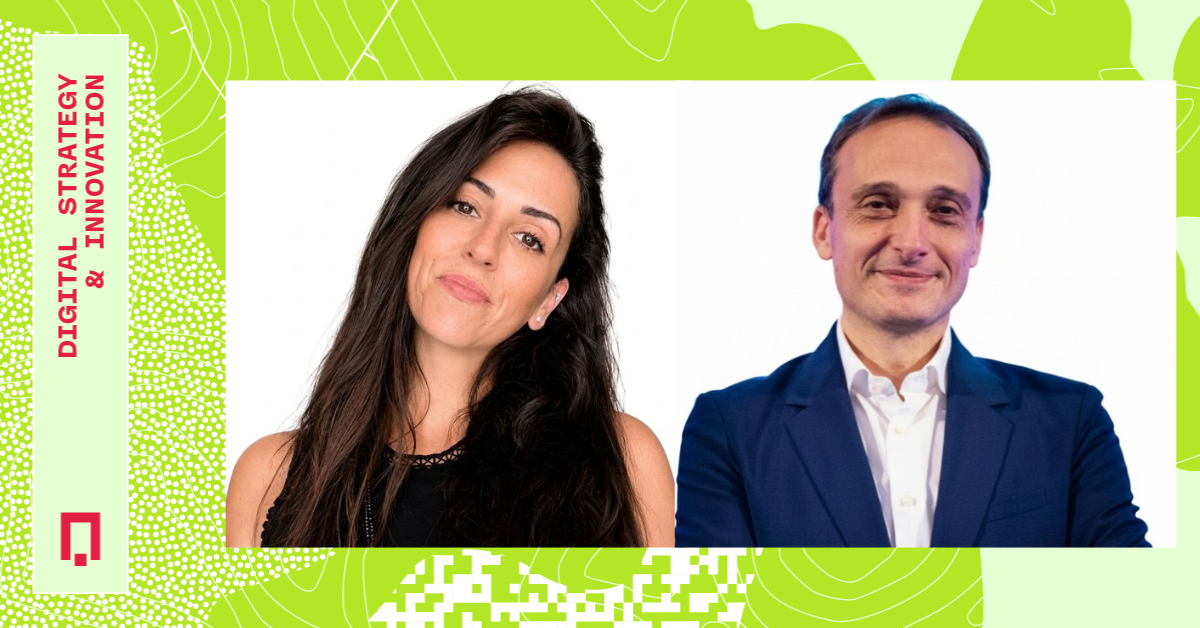
How does online visibility change when artificial intelligence is doing the searching? From reviews to social media, from Google searches to generative responses, Luca Bove, an SEO and Google Maps expert, explains the new rules for getting found in the age of AI. He was interviewed by by Alessandra Cauzo of the BTO 2026 Social Media Lab, a project dedicated to experimentation and new forms of communication in tourism.
Alessandra: This year’s theme is “Offbeat Tribes”: travelers are looking for something unique and experiential, and they’re relying more and more on AI. We know that updates happen faster than the speed of light. What has changed over the past year, from BTO 2025 to 2026? What are the most important updates to be aware of, and is it just a matter of algorithms, or have travelers changed as well?
Luca: A lot has changed, because artificial intelligence is advancing at a rapid pace and has made things possible that weren’t before. Consumers have adapted quickly, and travelers are using it more and more—to plan their trips and to ask questions that are much more complex and structured than before.
Other changes involve legislation. A recent change to SERPs—Google’s search results pages—due to the DSA (Digital Services Act) (source) has had a profound impact and is changing the way we need to approach them. And then there are the algorithms, which, as always, are constantly evolving.
Something disturbing is also being noticed: to prevent models like ChatGPT or Claude from harvesting its data without authorization, Google has started “spamming” SERPs with random results (source). As a result, scraping activities yield inaccurate information, creating real tension surrounding the protection of and access to data on search results pages.
The point is that, even if OpenAI’s and Claude’s models were better than Google’s, Google has access to a wealth of data that the others don’t: user behavior, Google Business Profile reviews, and all search queries. The others don’t. That’s why they either strike deals with third parties, such as TripAdvisor—which is much smaller, however—or try to access the data directly from Google, which blocks them. It’s one of the new realities we have to deal with.
Alessandra: Realistically speaking, reviews are the bridge between these two worlds. Why are they important, and why are they the key to being found when an artificial intelligence is doing the searching? And how much does it matter that they describe specific aspects—such as atmosphere, hospitality, and details of the experience—compared to just a numerical rating?
Luca: Reviews remain the cornerstone of a business’s reputation. In the hotel industry, researchers have been studying the correlation between a good average rating and revenue for years: reputation is a ranking factor for Google Business profiles, and to a lesser extent, for Booking and others as well.
Today, however, reviews have effectively become data for AI. When we ask artificial intelligence about something subjective—for example, “I’m going on a first date with a girl I like; find me a good place”—Google and others, whenever possible, draw precisely from what users say, namely from reviews.
And the content of the review matters most: we need detailed, in-depth reviews. It’s no coincidence that Google itself, after we submit a review, sends us an email asking if we want to expand it—because the more information we provide, the better the system understands the context.
Google also draws information from photos: it analyzes images to capture the “vibe,” or atmosphere. There have been AI studies in which the system was asked, “Find me a peaceful path in the shade,” and it responded based on photos featuring trees; similarly, if there’s a terrace overlooking the sea or a lake, it can recognize it. That’s why we need to learn to ask for more detailed reviews—ones that encourage people to express the more emotional and subjective aspects of their experience.
Alessandra: The social media algorithm: before, social media operated separately, and AI didn’t exist; today, however, even Instagram posts end up being indexed by Google and, as a result, appear in AI responses. How important is it to maintain a well-curated social media presence to align the social media algorithm with SEO and, by extension, with GEO?
Luca: Artificial intelligence seeks consensus: to answer a question, it draws on documents it finds online, and among the most important of these are social media posts. For example, it’s well documented that AI analyzes YouTube content very thoroughly, but it also analyzes Instagram and Facebook. Making your posts visible is therefore very useful for increasing the likelihood of being included in the answers generated by AI assistants.
What’s needed, then, is broad, wide-ranging, and multimodal communication: using all available channels, from traditional digital PR to social media and newsletters—anything that can be read.
Alessandra: One of your sessions at BTO is “The Toolbox.” But before we get our hands on the tools, where should we start?
Luca: First and foremost, from people’s specific questions. That’s where we start: with face-to-face interviews, with what customers tell customer service, and with the real needs that emerge. Because AI, right now, wants something real, not artificial: those who share authentic experiences through reviews or address specific needs are rewarded. This is the initial phase, the one that comes before any tool.
The discussion with Luca Bove highlights a shift that directly affects those working in tourism: it’s no longer enough to simply maintain a presence on digital channels; we need to understand how artificial intelligence interprets the information, reviews, and content available online.
This challenge requires technical skills, an understanding of travelers, and a communication strategy capable of integrating SEO, GEO, and social media.
There will be two sessions with Luca Bove at the Stazione Leopolda in Florence:
- November 10, 2:00–2:50 p.m., Hall #6 – “Destinations on Google: Get Discovered, Understand Travelers, Grow,” with the Google Travel + Local Search EMEA team.
- November 11, 3:00–3:50 p.m., Hall #6 – Toolkit: “GEO Reputation: How to Be Found When AI Is Searching.”
The interview was conducted by Alessandra Cauzo, a communications professional selected for the BTO 2026 Social Media Lab.
Edited by: Roberta Milano.
Would you like to attend Luca Bove’s sessions and other events at BTO 2026? Choose the ticket that best suits your needs here.
