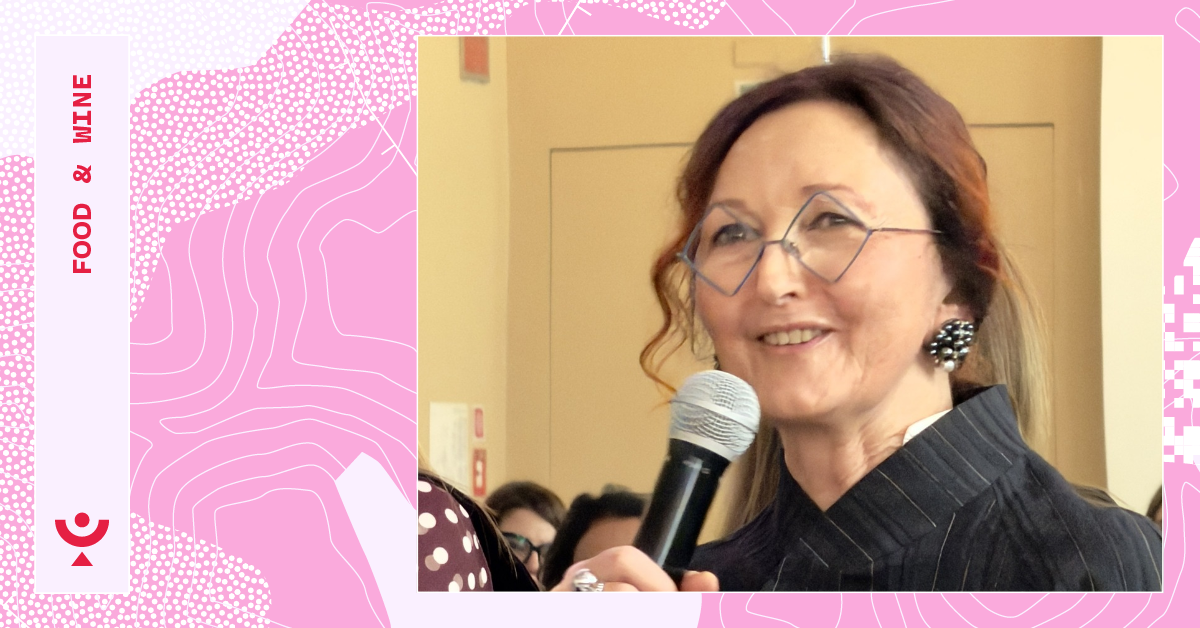
A journey, a tasting, a festival: often, the journey begins with a passion. But how well do we really know the people who choose our regions?
We discuss this with Alessandra Arcese, Coordinator of the Regional and Business Qualification Division at ISNART, the National Institute for Tourism and Cultural Research, drawing on data from the Chamber of Commerce System’s Tourism Economy Observatory and the theme of BTO 2026, “Offbeat Tribes.” A discussion on how travelers are changing and what destinations can do to connect with them.
Roberta: Alessandra, let’s start with the summer. The numbers are good: can we consider ourselves satisfied?
Alessandra: “The results are positive, with1.8% growth compared to last year and an international component accounting for 56% of the total. This confirms Italy’s appeal. To understand how long this growth might last, however, we must also look at what’s happening on the ground: which experiences are being chosen, which businesses are involved, and what relationships are being built. Counting visitors is necessary; understanding their motivations and behaviors helps us transform those visitor flows into lasting value.”
Roberta: This year at BTO, we’re talking about Offbeat Tribes. Does your research touch on these communities of travelers?
Alessandra: “Yes, because more and more often, a travel decision is driven by a passion: walking, cycling, discovering a wine, or attending an event. Even people who are very different in age or background can find common ground in these shared interests.”
At ISNART, we have been working on this approach since 2023, when we developed the Avatourmodel—a portmanteau of “Avatar” and “Tour.” These profiles help us understand the motivations, expectations, and behaviors of different traveler communities. By integrating statistical data, regional information, and location intelligence tools, we can better understand what experiences travelers are seeking and how demand is changing. It’s a way to bring the numbers closer to the people.”
Roberta: Let’s take an example. What do the “taste tribes” tell us?
Alessandra: “Food and wine have a remarkable ability to connect different experiences. Our food and wine communities spend an average of more than 115 euros per day. And the 2026 ISNART Report on spa tourism and the wellness market shows that local food and wine is the second most important factor in destination choice, even for spa tourists.”
“This tells us that passions are intertwined. Those seeking wellness may want to get to know local producers; those visiting a winery may be interested in a nature tour or a cultural experience. For destinations, this is an invitation to design offerings that bring these possibilities together, making them easy to discover and enjoy.”
Roberta: In the meantime, the way we plan trips is changing, too. How big a role does artificial intelligence play?
Alessandra: “Already, one in four travelers uses artificial intelligence tools to search for information, compare destinations, and plan their vacations. This change also affects the way a region markets itself.”
“People are asking questions that are increasingly tied to their own desires: they’re looking for an experience that fits their interests, the time they have available, and the people they’re traveling with. It’s therefore essential to provide clear, up-to-date, and consistent information. And, even before that, to have a thorough understanding of what you’re offering and who might be interested in it.”
Roberta: Let’s bring all of this to the local area: where should a destination start?
Alessandra: “By listening to what people want and through dialogue among the operators. A winery, a museum, and a bike trail may appeal to the same people, but their geographical proximity alone isn’t enough to create an experience. You need connections, services, information, and an offering that visitors can actually choose and purchase.”
This is also the purpose of our participation in BTO, for which we have been a scientific partner since this year: to compare analyses and experiences to help regions and businesses interpret these changes. In the panel discussion “Wine Experience 4.0: When Wine, Culture, and the Outdoors Become a Destination,” we’ll bring this perspective to the table: building on people’s passions to create experiences and relationships that stand the test of time. Because the future of tourism will belong to those who understand travelers best.”
The interview was conducted by Roberta Milano, head of the Food & Wine Tourism Food & Wine Tourism at BTO 2026.
The event with Alessandra Arcese will take place at the Stazione Leopolda in Florence on November 10 at 3:00 p.m. in Hall #4, during the panel discussion Wine Experience 4.0: When Wine, Culture, and the Outdoors Become a Destination.
Choose here the BTO 2026 ticket that best suits your needs.
We look forward to seeing you in Florence for BTO – Be Travel Onlife.
